Organisational and cultural change · Two arenas
The technology was
never the problem.
Rhyze practises one discipline — organisational and cultural change — in two arenas: IT that has to deliver business outcomes, and IT in service of nature. Not a systems integrator. Not a management consultant. Not a vendor. A strategic advisory — with skin in the outcome.
The problem I solve
The constraint is the strategy, the operating model, and the organisation.
What blocks enterprise transformation is the organisation's relationship to its technology — vendors who optimise for effort rather than outcomes, governance that measures activity instead of delivery, and the human half of the change treated as something to sort out once the technology is done. The result is rarely a clean failure. It is a date that moves twice, a scope that quietly shrinks, and a release that only lands because a handful of people worked three weekends to get it there.
The organisational and cultural changes that make any of it stick are not a separate workstream. They are the same workstream.
One discipline, two arenas
The same work, in two places it is needed most.
Arena one
IT that delivers business outcomes.
Programmes fail for human reasons: nobody owned the outcome, the last attempt spent the organisation's confidence, and governance reviewed cost every month and adoption never. I fix the organisation's relationship to its technology — the operating model, the governance, the middle that has gone quiet. Where the situation calls for it I bring in a small senior team — architecture, programme, change — drawn from networks I have built across Europe and the US, owning the core domains end to end. Not a committee. Not a PMO. Not a bench.
Arena two
Technology in service of nature.
From sustainable IT to IT for sustainability — nature and carbon as operating decisions, not a reporting exercise. Biodiversity data, TNFD, and geospatial AI, treated as engineering and organisational problems. I do not sell disclosure; the audit firms do that. The bottleneck you are already paying for is often a sustainability outcome in disguise.
The capability should end up inside your organisation, not mine.
Method
Survey, then thread.
I map the system as it is, then thread the change through it — the engagement follows the terrain, not a template. Not every client arrives with a sustainability agenda. That is not a prerequisite — I start with the problem at hand and earn the broader conversation from there.
Diagnostic sprint
One bounded engagement, entered from either direction: you are about to commit budget and want to know what you are walking into, or you committed months ago and the programme has stopped moving. Architecture, governance, and change blueprint. Go / no-go gates for follow-on work. Fixed fee.
Embedded advisory
Two to four days per week, scaling with programme phase, plus specialists from my network where the work needs them. Hourly, because open-ended work priced as a package is either padded or a fight. The transfer window, not a retainer tail — I build internal capability and hand over.
Fixed fee where the scope is bounded. Hourly for the embed.
The sprint has edges, so it carries a price. The embed does not, and open-ended work sold as a package is either padded or an argument about change requests. You keep the diagnostic blueprint whichever way we start.
Where this comes from
Experience
25+ years in enterprise technology and change
Amazon Web Services
Enterprise Strategist; Commercial Sector Sustainability Leader, EMEA
Book
Co-author, Reaching Cloud Velocity
Published
Sustainability Magazine, July 2024
Analyst
IDC Perspective on geospatial AI
Who you are dealing with
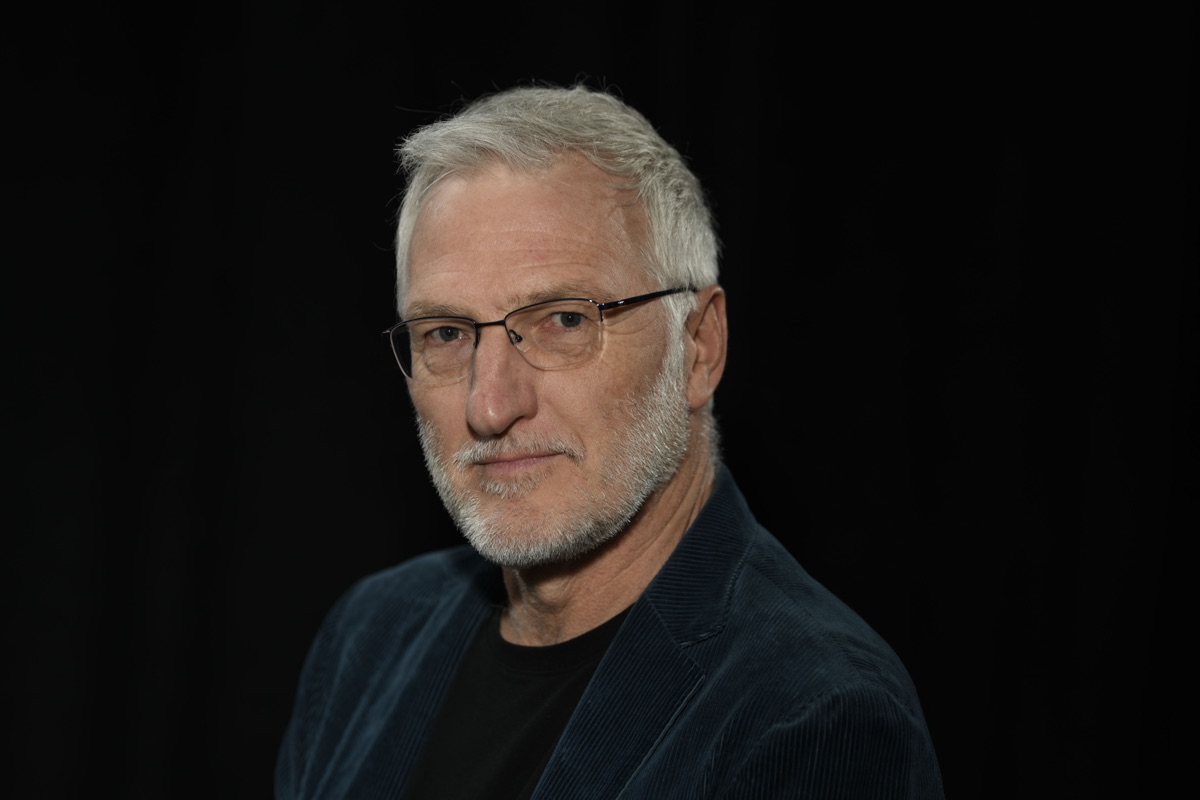
Thomas Blood
Founder
Twenty-five years in enterprise technology, most recently as an Enterprise Strategist at AWS and its Commercial Sector Sustainability Leader for EMEA, and co-author of Reaching Cloud Velocity. I work on the organisational side of technology programmes — the part that decides whether the technical work lands.
Based in Germany. I work in English and German.
Begin a conversation.
Two or three sentences is plenty — what is stuck, and what happens if it stays stuck? I am Thomas Blood, and I answer personally, usually within one working day.
